

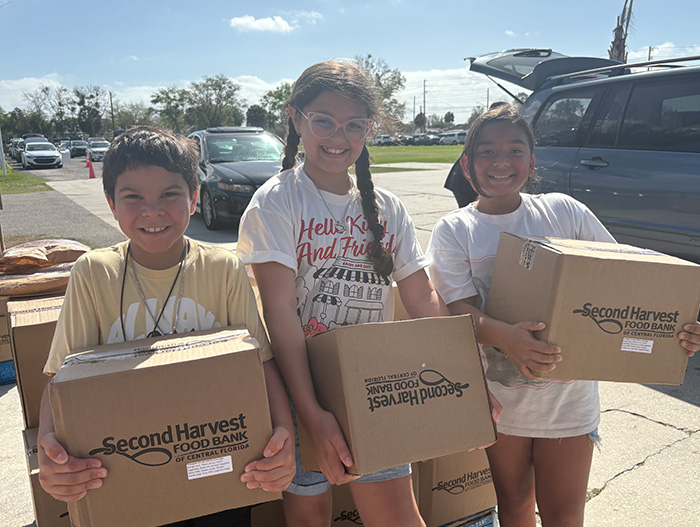
One in six Central Florida kids face hunger. Heading home from school for Spring Break this time of year puts more pressure on families living paycheck-to-paycheck who are already experiencing heightened affordability challenges.
The annual school break for students comes at a time when some federal workers are not receiving paychecks due to the partial government shutdown, gas prices are rising, produce availability is decreased due to recent periods of sustained freezing temperatures, and food prices remain high.
“It’s an additional cost for families to feed them all week, and that’s a rough thing for people living right at the edge,” said Greg Higgerson, Second Harvest’s Chief Development Officer. “There are a lot of different circumstances that are challenging people right now economically.”
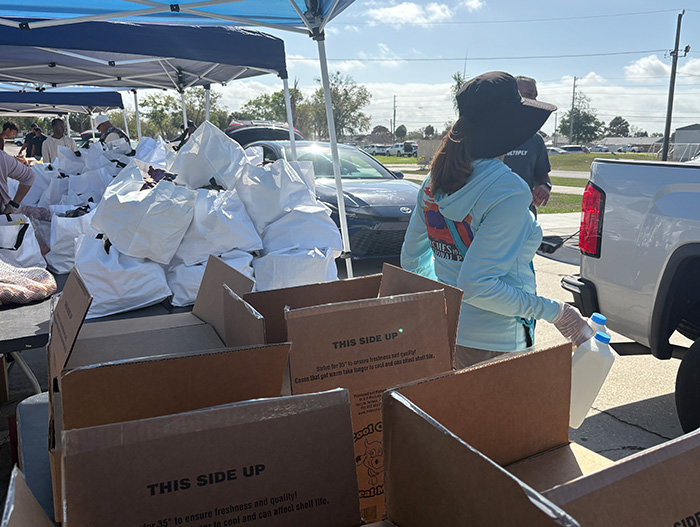
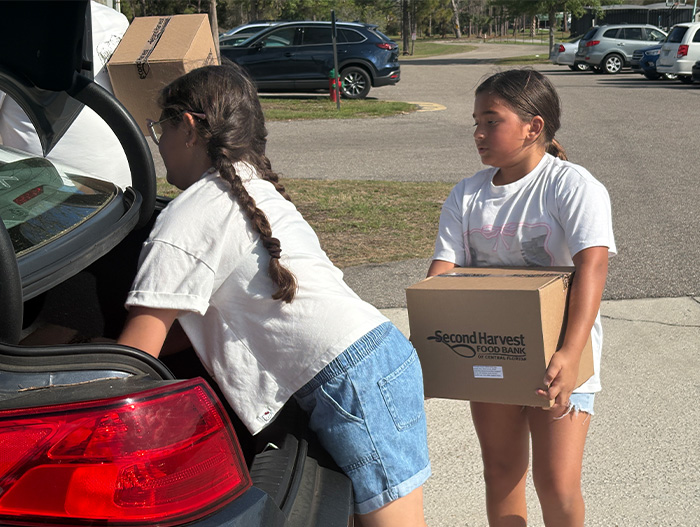
Food distributions across the food bank’s network of feeding partners, including mobile distributions, are seeing more people seeking hunger relief.
A recent distribution by Advance Community Center at Viva Church in Orlando was set up to provide food for 450 families, but co-director Wanda Rios said she expected and has recently seen more than 500.
“A lot of people are jobless or part-time,” she said when asked to describe what neighbors share with her about their circumstances. “They don’t have enough to put on their tables to support their families, especially when they’re spending the whole day at home.”
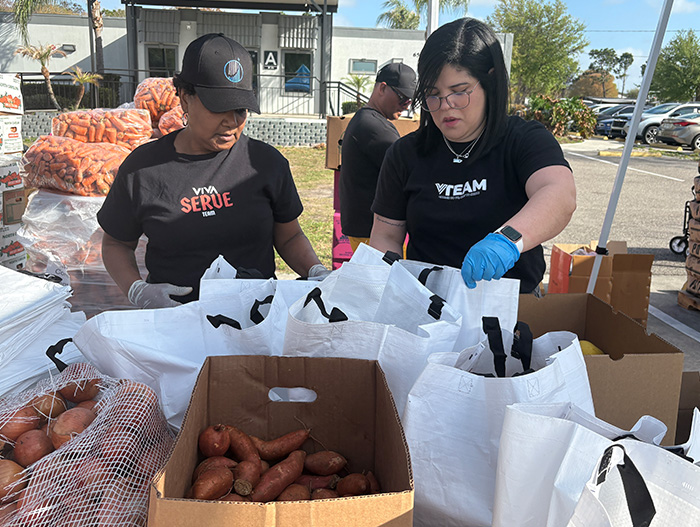
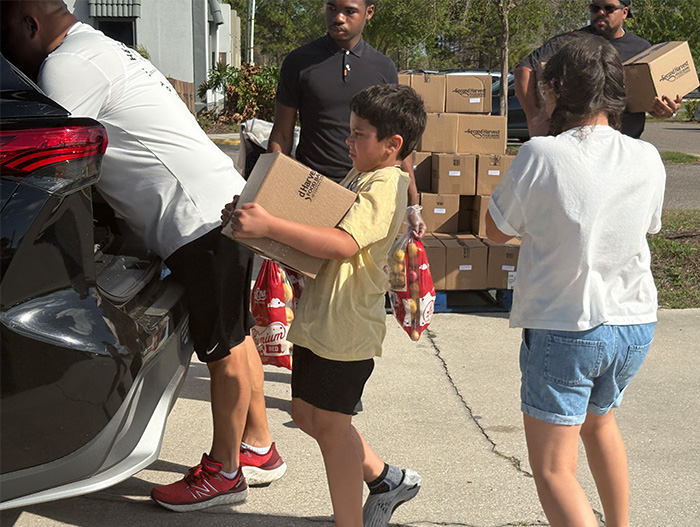
Wanda said the need for help with food is increasing.
“Right now, there’s a lot of anxiety and stress over what is happening overall,” she said.
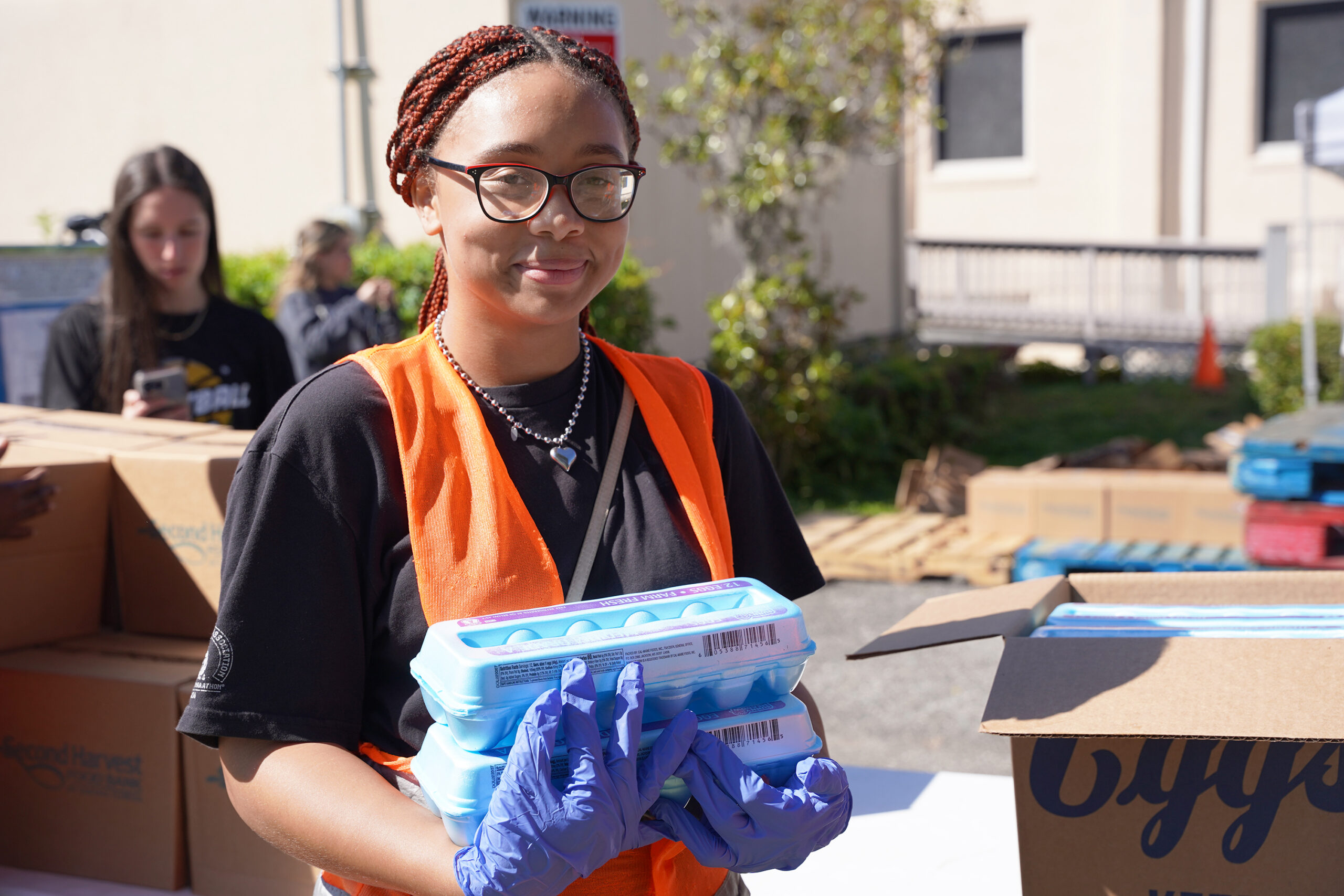
The distribution provided the neighbors in line with fresh produce like sweet potatoes, grapefruit, carrots, cabbage, onions, and more. They also received milk, frozen meat, and shelf-stable staple foods.
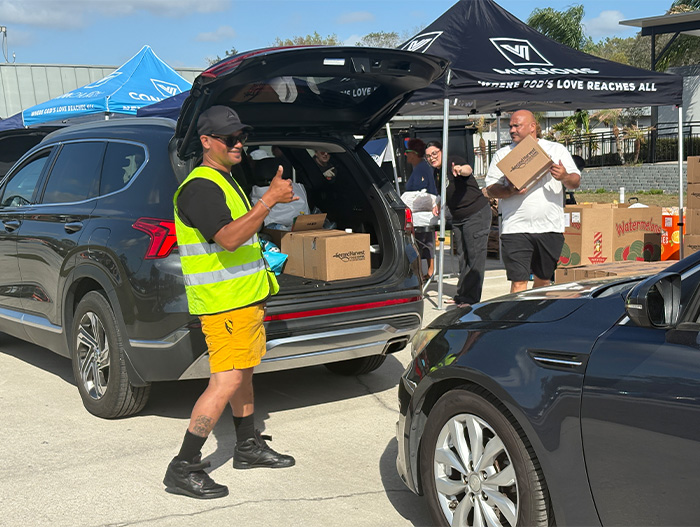
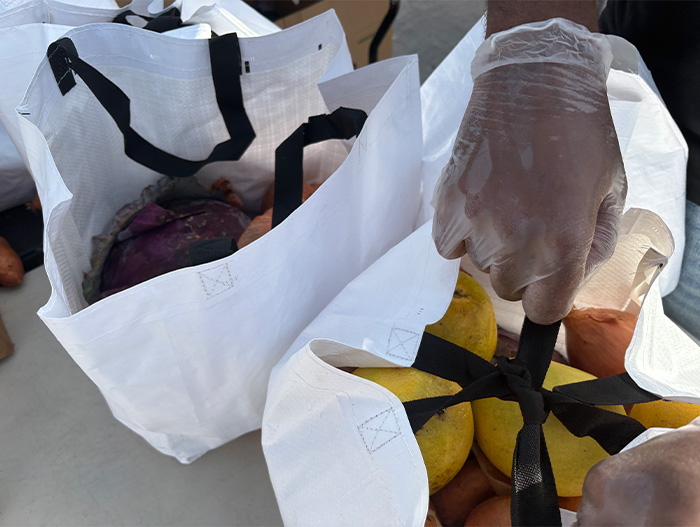
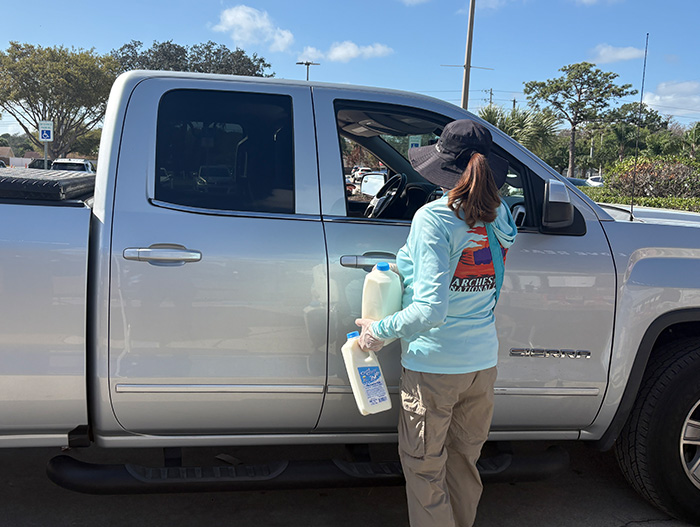
“The great thing about mobile distribution is that we can give a variety of food products to the people who need help,” Greg explained. “We’re talking about fresh fruits and vegetables, high-protein items – meat, milk, things like that. There are a lot of different factors that are affecting people’s ability to afford enough food right now, not the least of which are grocery prices, housing prices, and daycare costs. It’s a challenging time for a lot of people.”
Thanks to community support, Second Harvest continues to respond to the heightened need for food through its network of more than 800 feeding partners in seven Central Florida counties.