

Consuming nutritious food is not always easy, even after someone receives it.
People experiencing homelessness often face more challenges after getting food from a local food pantry. If the item requires a can opener, cooking supplies, or even water, it might not be usable depending on their living situation. Large or heavy containers are also hard to carry for individuals walking, biking or using public transportation.
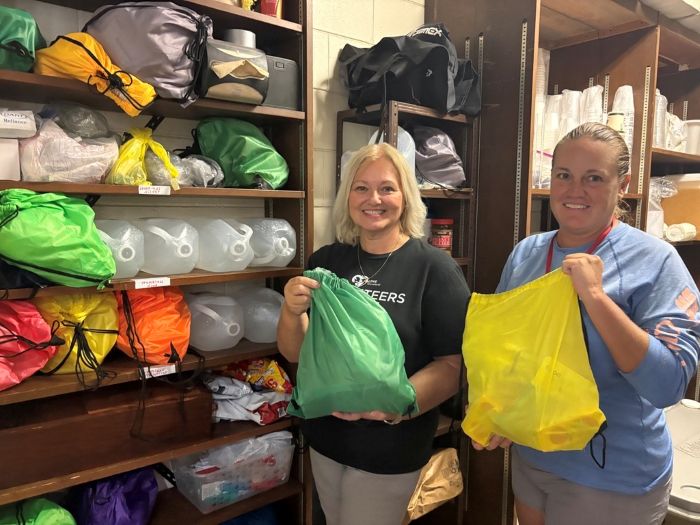
To increase access for these neighbors, Second Harvest Food Bank of Central Florida distributes drawstring bags packed with nutritious, ready-to-eat foods to feeding partners that support neighbors experiencing homelessness or housing instability.
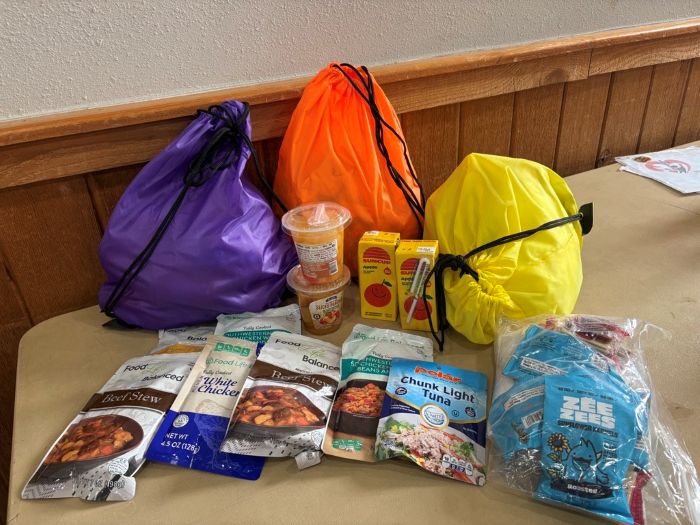
Thanks to a grant from the Steven & Alexandra Cohen Foundation, the bags include tuna packets, fruit cups, juice boxes, ready-to-eat meal packets, sunflower seeds, crackers, and more. Volunteers pack these bags at Second Harvest’s main Orlando warehouse, where partners pick them up to share in their communities.
Love Groveland is one of the feeding partners that distribute these curated bags. Executive Director Melissa said she and other pantry volunteers noticed that some neighbors declined any perishable food and left behind anything they could not use or carry.
“It’s making it easier for us to reach our community because we don’t always have all those items on hand,” Melissa said. “We try to set items aside, but it’s never to the extent of what is provided in this bag. It’s a greater impact that we can make.”
Groveland is a mostly rural area in Lake County. Melissa said some neighbors live in cars, motels, or even in the woods nearby. Many walk or bike to the pantry.
Billy lives in a house, but it lacks electricity and running water, making it difficult to prepare many types of food. He also walks to Love Groveland to receive food assistance, which is a five-mile trek.
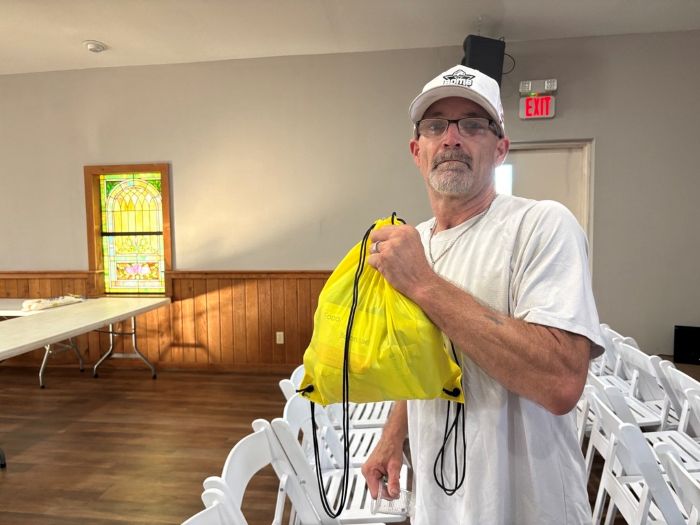
“These bags help us while we’re living without power,” he explained. “I’m looking for a job so I can get my power back on.”
Billy is happy to find ready-to-eat beef stew, crackers, and peanut butter and jelly in the bag. He can eat these at home or while he is on the go.
“It definitely helps,” he said. “Without them, I ‘d be hungry. I just thank all the people that have a part in making these because they do help.”
Billy’s partner Lisa sometimes stays with him at their house, but she also spends several days a week in town, sleeping in a tent.
They visit Love Groveland’s food distribution every week when they are in town.
“We always make sure we’re here to get the bags because it’s convenient,” Lisa explained. “It’s easy for us, and it helps us a lot.”
Lisa said her favorite things in the bags are the beef stew and macaroni and cheese packets, but everything helps her get the nutrition she needs.
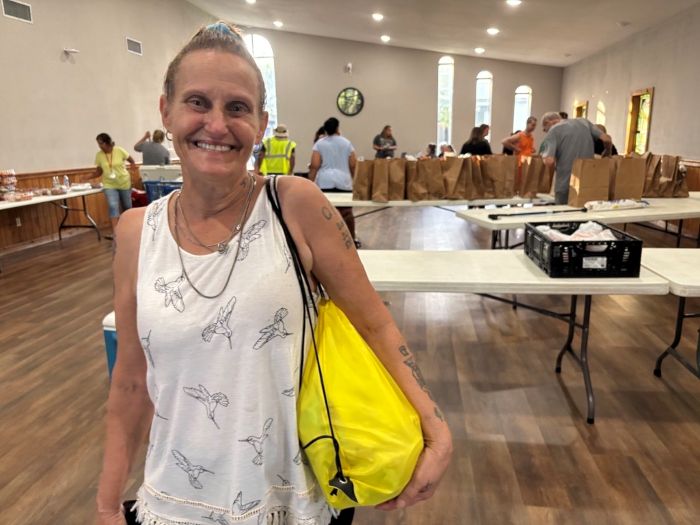
“The tuna fish is a good protein. Chicken is another good protein,” she said. “The food gives us nutrition. It gives us vegetables and fruits and the protein we need. That’s the major thing. If we’re not walking, we’re on the bike. When we’re doing that, that’s a lot of strength, and we burn a lot of calories.”
Other communities in Central Florida are also seeing positive impacts from these bags. Bettina, CEO and Founder of Embrace of Celebration, gives out bags every weekend to people living in extended-stay motels along U.S. Highway 17-192 in Kissimmee.
She gives out about 50 to 60 bags each week, until they are all gone.
“Our families along the Highway 192 corridor absolutely love these bags,” she said. “Many of the families we serve are in transition and living in extended-stay motels. Although they may have a room for the night, many are still experiencing homelessness and housing instability.”
Bettina explained that many rooms are not equipped with stoves or other basic equipment for meal preparation.
“That is what makes these support bags so meaningful,” she said. “They are practical for the circumstances our families are living in right now, easy to carry, and filled with items that can help.”
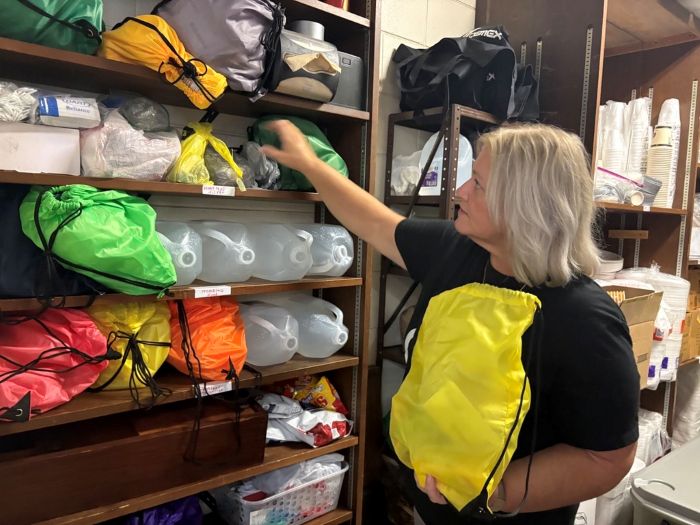
Back at Love Groveland, Melissa said they started by giving out five to ten bags each week, but that number is growing fast.
“We see so many come in every week, some who we didn’t know were in that situation, and they ask for a bag,” she said. “It is truly a lifeline. Since we have gotten to know our unhoused families, we have been able to have more meaningful conversations and fulfill other needs like tents and sleeping bags.”
Melissa said she’s grateful for the bags because they give her organization another way to help neighbors.
“There’s a lot in that bag for somebody who has literally nothing else,” says Melissa.