

Feeding health in Central Florida
One in seven Central Floridians lives with food insecurity. One in ten Central Floridians has been diagnosed with three or more different chronic health conditions. Those two facts aren’t a coincidence.
Central Florida is chronically ill in part because people aren’t getting the nutrition they need to be healthy. When you don’t have stable access to food, you’re at a much higher risk of developing diseases like hypertension (impacting 1 in 3 Floridians), diabetes (impacting 1 in 10 Floridians), and heart disease (impacting 1.4 million Floridians, and the leading cause of death in the state).
Hunger is here to stay, but let’s narrow the gap
Frank and Gloria did everything right. They took their finances seriously – saved money, earned an education, and put their kids through school. But now, retired from their careers as teachers, they find themselves struggling to stretch their income to the end of every month. And they’re not the only ones.
With Hunger Relief Funding Halted, Millions of Meals Are Off the Table
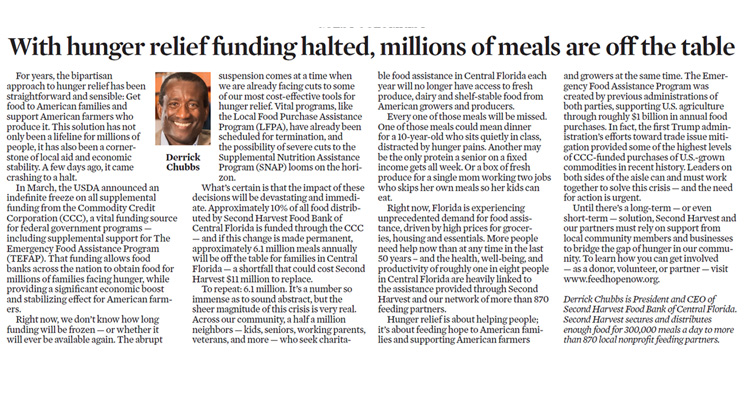
For years, the bipartisan approach to hunger relief has been straightforward and sensible: Get food to American families and support American farmers who produce it. This solution has not only been a lifeline for millions of people, it has also been a cornerstone of local aid and economic stability. A few days ago, it came crashing to a halt.