

Welcome to Food Bank 101, a four-part series that answers frequently asked questions about a food bank and how it works. This introduction is aimed at establishing a basic understanding of what a food bank is and its role in a community.
What is a food bank?
A food bank is a central hub of a hunger-relief network. Food is sourced, stored and distributed to a network of feeding partners.
“A food bank is a large nonprofit that gets food out into the community,” said Arika Richardson, Philanthropy Manager.
Second Harvest is a private, nonprofit organization that collects and distributes food to a network of more than 870 feeding partners across Brevard, Lake, Marion, Orange, Osceola, Seminole and Volusia counties.
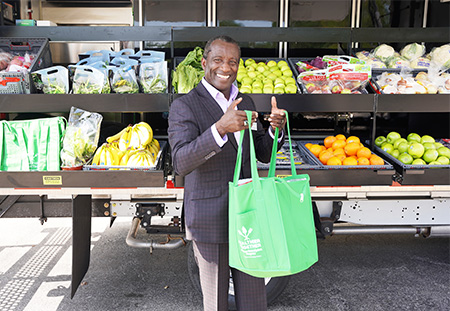
These partners include food pantries, soup kitchens, shelters, senior centers, schools, healthcare sites and more. Mobile distributions, home deliveries and nutrition programs extend this reach even further, helping ensure that nutritious food gets to neighbors where and when it’s needed most.
What is the difference between a food bank and a food pantry?
A food bank serves as the main distribution center of large amounts of food for community-based feeding partners, which include food pantries that distribute food directly to neighbors.
“A food pantry is an organization where our neighbors go to pick up food,” Arika explained. “At Second Harvest, we work with more than 800 feeding partners, all kinds of organizations ranging from schools to community centers to shelters.”
In Central Florida, the feed partner network stretches across seven counties and helps distribute enough food for 330,000 meals daily.
True or false, is food banking just about food?
False. Hunger is connected to health, education, employment and financial stability. Addressing food insecurity typically impacts the bigger picture.
In addition to supporting neighbors facing hunger, Second Harvest has programs to address health, nutrition, education, employment and more.
“Food banking is so much more than food,” Arika said. “There are so many programs here that I’m constantly learning myself – ranging from Medically Tailored Meals to Nutrition Education to making sure people are able to get the food and resources they need.”
Check back for more Food Bank 101 lessons soon.