

Hunger is a Big Problem – and It Needs a Big Solution
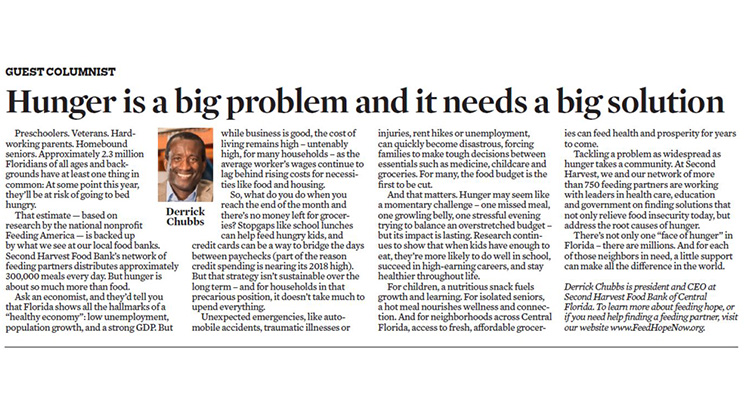
Pre-schoolers. Veterans. Hardworking parents. Homebound seniors. Approximately 2.3 million Floridians of all ages and backgrounds have at least one thing in common: At some point this year, they’ll be at risk of going to bed hungry.
That estimate – based on in-depth research by the national nonprofit Feeding America – is backed up by what we see at our local food banks. Second Harvest Food Bank’s network of feeding partners distributes approximately 300,000 meals every day. But hunger is about so much more than food.
A Journey of Hope
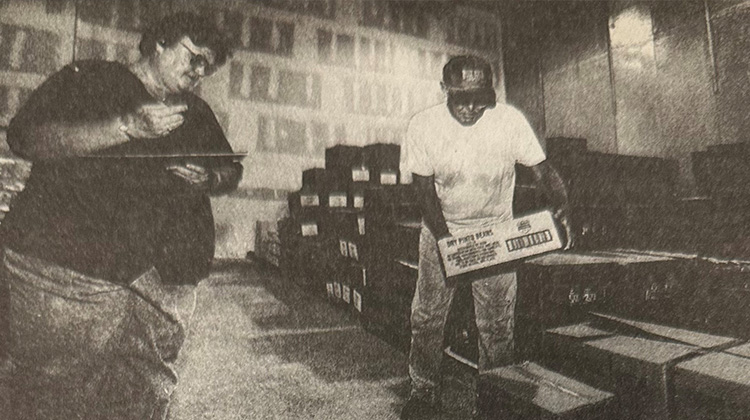
Whether we acknowledge it or not, we all are on a journey together. Every human being on Earth makes a long, sweeping journey every 365 days around a giant blazing sphere of gas. If we are lucky, we wake up each morning of that journey with gratitude and a nutritious meal to fuel our bodies.
At Second Harvest, we have been on another kind of journey together, which has taken us on that path around the sun forty times. It has been a trip filled with uncertainty and even tragedy. Still, it has also been replete with daily examples of love, compassion, generosity, and hope. Indeed, it has.
The New Normal of Hunger – and What We Can Do About It
“After I pay the rent, utilities, and daycare, I budget what’s left – and sometimes, there’s not enough left over to bring home groceries for my kids.” It’s a common refrain among visitors to Second Harvest’s network of community feeding partners across Central Florida. And many families seeking food assistance each month do not take it for granted.
Second Harvest distributes enough food for 300,000 meals per day, a level first reached at the height of the pandemic in 2020 and 2021. That may seem surprising in a strong economy: Most people have jobs, pay is increasing and businesses that faltered over the last few years have begun to recover.
40 Years of Nourishing Lives
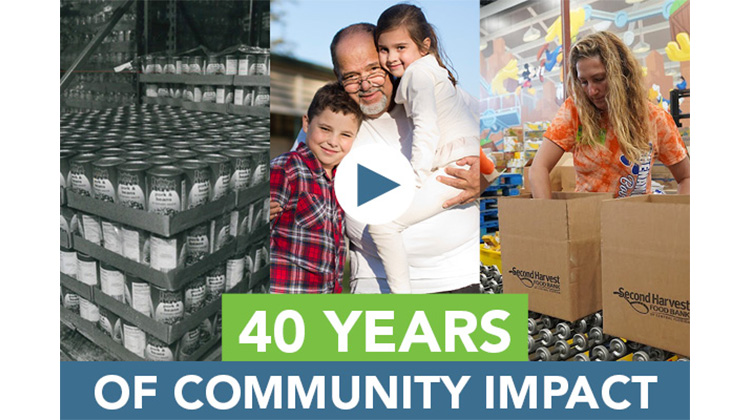
Like so many worthwhile things, Second Harvest Food Bank of Central Florida started as a crazy idea among a group of big-hearted friends in the early 1980s. Little did they know that their discussions would be the launching pad for the future of hunger relief for millions of our Central Florida neighbors over the next four decades.
Second Harvest Food Bank has been nourishing lives and feeding hope for 40 years because caring people like you believe no one in our community should face hunger.
The journey is filled with milestones and moments of incredible impact. Watch our video and check out our timeline to see all that’s been accomplished since 1983, thanks to our unwavering community support.